Reviews

Papa on The Leonard Lopate
Show (audio)
http://www.wnyc.org/story/anthony-papa/
Anthony Papa joins us to discuss his books
This
Side of Freedom: Life After Clemency and
15 to Life: How I Painted My Way to Freedom.
He'll share his experiences returning home after serving
12 years of a 15-to-life sentence for a non-violent drug
crime sentenced under the mandatory provisions of the
Rockefeller Drug Laws of New York State. Last year, he
received a pardon from Gov. Andrew Cuomo and became the
first person in the state’s history to receive both
clemency and a pardon.
Leonard Lopate hosts the conversation New Yorkers turn to each afternoon
for insight into contemporary art, theater, and literature, plus expert
tips about the ever-important lunchtime topic: food.
Produced by
WNYC.
ALTERNET
How the Stroke of a Pen by a Governor Can
Completely Change a Prisoner's Life -- Just Ask Tony Papa
The power to commute
prison sentences is rarely exercised, but can generate powerful results when
it is, as Papa shares in his new book.
By
Phillip Smith
AlterNet
February 6,
2017
This
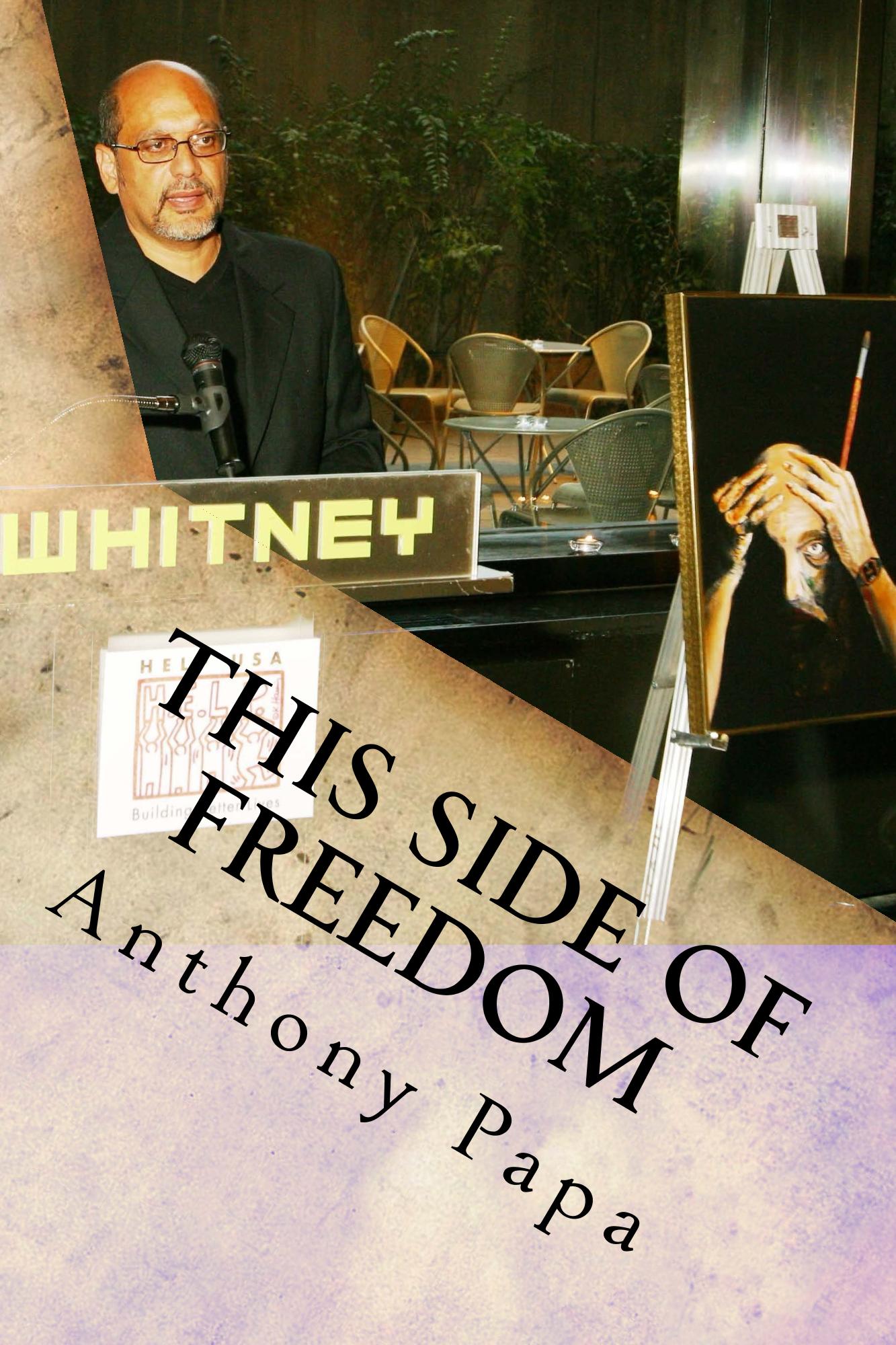
Side of Freedom: Life After Clemency by Anthony
Papa (2016, CreateSpace, 271 pp., $12.99 PB)
After decades of the war on drugs and other "tough
on crime" policies, America seems finally to have begun to come to its
senses. The imprisonment rate has leveled off, and we're no longer seeing
year after year after year of ever-increasing numbers of people behind bars
in the land of the free.
We've seen that change at the federal level, with
the Fair Sentencing Act, softening of the sentencing guidelines for drug
offenses, and Justice Department instructions to prosecutors to avoid
hitting bit players with mandatory minimum sentences. We've seen that at the
state level, with sentencing reforms in dozens of states leading to an
actual reduction in the number of state prisoners. And we've even seen it at
the local level—the nation's system of city and county jails—through things
like marijuana decriminalization and reforms in bail practices.
That's all well and good, but we're still the
world's leading jailer, in both absolute and per capita term, with more than
two million people locked up (China only has 1.5 million). Tens of thousands
of them are non-violent drug offenders sentenced under draconian laws
enacted before the fever broke—confined not for years, but for decades--and
writing less brutal sentencing laws now isn't much help to them.
In his waning days in office, President Obama struck
a bold blow for justice and made modern presidential history by granting
clemency to more than 1,700 federal drug prisoners. Let's be crystal clear
here: These were not pardons granted to people who had finished their
sentences and long ago returned to society and now wanted their records
wiped clean; Obama's commutations meant that people currently spending their
lives behind prison walls walked free—years or decades before they otherwise
would have. Hundreds, mostly third time drug offenders serving life
sentences, would have died in prison.
But the president can only grant pardons or
commutations to people in the federal system, and the vast majority of
American's prisoners are in state prisons. Each state governor holds a
pardon power similar to the federal chief executive's, but it is used
sparingly, some might even say stingily, and has certainly never been
wielded in a mass fashion to achieve a social justice end like Obama did at
the federal level.
That's a crying shame—and a potential focus of
reform organizing—because a governor's signature can liberate a human being
who not only deserves a chance to breathe the air of freedom, but who may
actually make our world a better place by being in and of it instead of
being locked away from it—and us.
Ask Tony Papa. He was a young New York City family
man with his own business who, short on cash, who took an offer to make a
few hundred bucks by delivering some cocaine back in the 1980s, when New
York's draconian Rockefeller drug laws were still in full effect. It was a
sting, and Papa got popped. Like thousands of others, the luckless he
quickly entered the state's drug war gulag, sentenced to 15 years to life.
In an earlier work, 15 to Life, Papa told
the story of his bust, his seeming eternity behind bars, his slammer-honed
artistic talent, and how an anguished self-portrait that seemed to
encapsulate the horror and madness of crushing drug prohibition resulted in
some high-placed interest, followed by media attention, a public campaign on
his behalf, and his release after 12 years when he was granted clemency by
then-Gov. George Pataki. It is a remarkable tale of punishment,
perseverance, and redemption.
And now, he's back with the rest of the story. In
This Side of Freedom: Life After Clemency, the personable Papa
tells the tale of his life after rebirth—and makes achingly clear how the
trauma of years-long incarceration lingers in the psyche of the freed. There
is a clear public policy moral buried in these pages, too: Getting out of
prison is only the first step, re-entry into society is hard, society itself
seems to make it even harder, a virtual obstacle course for people taking
the baby steps of freedom, but if we as a society are smart, we will make
the effort, for our own collective sake as well as out of a humanitarian
impulse.
Compared to most newly freed prisoners, Papa had it
good. The campaign for his release had made him connections, he could find
work, he could revive his familial ties, yet still he struggled, and
understandably so. When you've spent a dozen years being told what to do,
freedom isn't easy.
Papa had his demons, and part of the way he fought
them was by resolving not to forget the prisoners he left behind. Within a
year of his release, inspired by the courageous years-long struggle of the
Argentine Mothers of the Disappeared, those survivors of the thousands taken
and killed by the military dictatorship of the 1970s, he and comic/political
gadfly Randy Credico formed the New York Mothers of the Disappeared along
with family members of the thousands imprisoned under the Rockefeller laws.
Papa, Credico, and the Mothers played a critical
role in early efforts to overturn the Rockefeller drug laws, and his tales
of feckless politicians, preening celebrity intervenors, and back room
double-dealing are the inside dirt on the glacial process of bringing some
sanity to the state's drug laws. It ain't pretty, but reform did
happen—eventually—and Papa got his social justice payback. If that isn't
redemption-worthy, I don’t know what is.
This Side of Freedom is one part memoir,
one part social history, one part heart-felt manifesto. Papa is an
effective, engaging writer who tells his story in discrete episodes and has
a knack for jumping from the personal to the political like a quivering
quantum particle. You'll meet a range of colorful characters and experience
the gamut of human emotion—the highs, the lows, the ennui—as you follow
Papa's path.
His is one portrait of life in turn-of-the-21st
Century America: mindless cruelty and brutality, mixed with racial
injustice, but leavened with the will to resist. Read and ask yourself: How
many other Tony Papas are out there, watching their lives tick away as
they're locked in the cells, when they could be out here helping the rest of
us make our world a better, more just and humane place?
Phillip Smith is editor of the AlterNet Drug
Reporter and author of the Drug War Chronicle.

NY:
Anti-Drug-War Activist Anthony Papa Wins Pardon
Headlines
Jan 10, 2017
In New
York state, anti-drug-war activist, painter and author Anthony Papa has
received a pardon from New York Governor Andrew Cuomo. In 1985, Papa agreed
to deliver an envelope of cocaine in a police sting operation in return for
$500. His first and only criminal offense cost him a 15-year-to-life
sentence. In 1996, Papa won a sentence commutation from then-New York
Governor George Pataki. He’s believed to be the first person in New York state history to
receive both a sentence commutation and a pardon.
https://www.democracynow.org/2017/1/10/headlines/ny_anti_drug_war_activist_anthony_papa_wins_pardon

http://www.nydailynews.com/new-york/n-y-drug-reform-activist-anthony-papa-pardoned-gov-cuomo-article-1.2940759
State officials also believe Papa is the first person in New York
history to receive both a sentence commutation — which then-Gov. George
Pataki granted him in 1996 — and a pardon.
EXCLUSIVE: N.Y. drug reform activist Anthony Papa receives pardon
from Cuomo
BY Glenn Blain
NEW YORK DAILY NEWS
Monday, January 9, 2017
Anthony Papa leads protests against Rockefeller-era drug laws.
(Andrade, Patrick)
[After nearly two decades of fighting to get other drug offenders
released from prison, Anthony Papa finally received a pardon for himself.
A longtime activist in the fight to reform New York’s drug laws,
Papa was among the more than 100 offenders granted a pardon or commutation
by Gov. Cuomo on Dec. 30.
While Papa’s pardon has been largely overshadowed by the
controversy over Cuomo’s decision to commute the sentence of former Weather
Underground member Judith Clark, Papa and other advocates see it as a
significant milestone.
State officials also believe Papa is the first person in New York
history to receive both a sentence commutation — which then-Gov. George
Pataki granted him in 1996 — and a pardon.
“The pardon . . . is both a vindication and a public proclamation
that I have demonstrated exemplary behavior over the 20 years since I have
been free,” Papa, a 62-year-old Brooklyn resident, told the Daily News.
Papa said it’s also a vindication of his belief that the
15-year-to-life sentence he received as a first-time drug offender in 1985
was overly harsh.
The sentence was typical of those handed out under New York’s
Rockefeller-era drug laws, which were adopted in response to the heroin
epidemic of the early 1970s.
“He is a living example of the inequities in the system that
existed due to the Rockefeller-era drug laws and has spent more than a
decade working in the pursuit of justice for others,” Cuomo said.
Anthony Papa shown with some of his art work. State officials
believe Papa is the first person in New York history to receive both a
sentence commutation and pardon.
(Roca, John)
“The power of clemency is one I take very seriously, and Tony
Papa’s work and deeds made it clear to me he was deserving of a pardon.”
Papa was convicted on drug sale and possession charges after he was
caught holding just over 4 ounces of cocaine a friend paid him $500 to take
from the Bronx to Mount Vernon in Westchester County.
“It was Christmastime, I had no money, I had to pay my rent and I
got desperate,” Papa said. “And when you get desperate, you do stupid
things.”
While in prison, Papa focused on art, and one of his paintings — a
self-portrait — was selected for an exhibition at the Whitney Museum.
After Pataki commuted his sentence, Papa became an activist for
reforming the Rockefeller laws. He formed the group Mothers of the New York
Disappeared to advocate for change and also went to work for the Drug Policy
Alliance.
Papa wrote two books about his experiences, with his latest memoir,
“This Side of Freedom: Life After Clemency,” now being distributed to prison
libraries in New York as a reference for inmates to prepare for their
release.
In 2002, Papa teamed up with Cuomo, who was then in the midst of
his first campaign for governor, to press the issue of drug law reform.
People rally for the repeal of the Rockefeller Drug Laws outside
the NYC Bar Association on west 44th st as the Sentencing Commission holds
public hearings inside.Anthony Papa, a former inmate who wrote a book about
his experience, talks to the crowd.
(Cataffo, Linda/New York Daily News)
“He used to come out in the street and rally with us,” Papa said.
Cuomo’s 2002 campaign flamed out, but the issue did not, and in
2009, lawmakers approved a package of drug law reforms that, among other
things, gave judges more flexibility to sentence low-level offenders to
treatment instead of prison.
Despite his relationship with Cuomo, Papa did not formally request
a pardon for himself until last year, after he was shut out of an apartment
he wanted in Parkchester, the Bronx.
“The same crap happened,” he said. “They looked at me like I had
two heads.”
Papa said he is grateful to Cuomo for granting the pardon — calling
him “a champion of the people” — and is looking forward to regaining rights
he lost because of his conviction, especially the ability to serve on a
jury.
He also plans to continue his work helping other nonviolent drug
offenders get out of prison and adjust to life on the outside.
“There are many roadblocks that people face when they are released,
from housing to getting a job, even relationships,” Papa said. “Prison does
not end at the prison wall. It goes beyond the wall.”
Send a Letter to the Editor
City & State New York / The
Slant Pod Cast
Portrait
of a Pardon: Criminal Justice Activist Anthony Papa
1/17/2017
Interviewed
by Nick Powell & Gerson Borrero
Audio:
The Slant – Portrait of a Pardonhttp://199.73.109.205/
Does 15 years to life for one drug deal sound excessive to you?
Our guest this week, Anthony Papa, is a living example of the
ineffectiveness of the Rockefeller drug laws. Papa served 12 years at Sing
Sing for a nonviolent drug crime before Governor George Pataki commuted his
sentence in 1996. Just last month, Andrew Cuomo officially pardoned Papa,
clearing his record after 20 years of criminal justice activism fighting for
criminal justice reform and against the excesses of the United States’ War
on Drugs.

Roger Stone famous political advisor and #1 author on the NY Times
bestselling list on his new radio show "The Cold Stone Truth" interviewed
Tony Papa says: "This Side of Freedom is a terrific
piece of work. I am very excited about it and wish everyone can read it!"
https://soundcloud.com/anthony-papa-994912770
Nov. 14,
2016
goo.gl/alT1Ez

Tony Papa at the PEN Prison Writing Awards 2016
goo.gl/wC7QZz
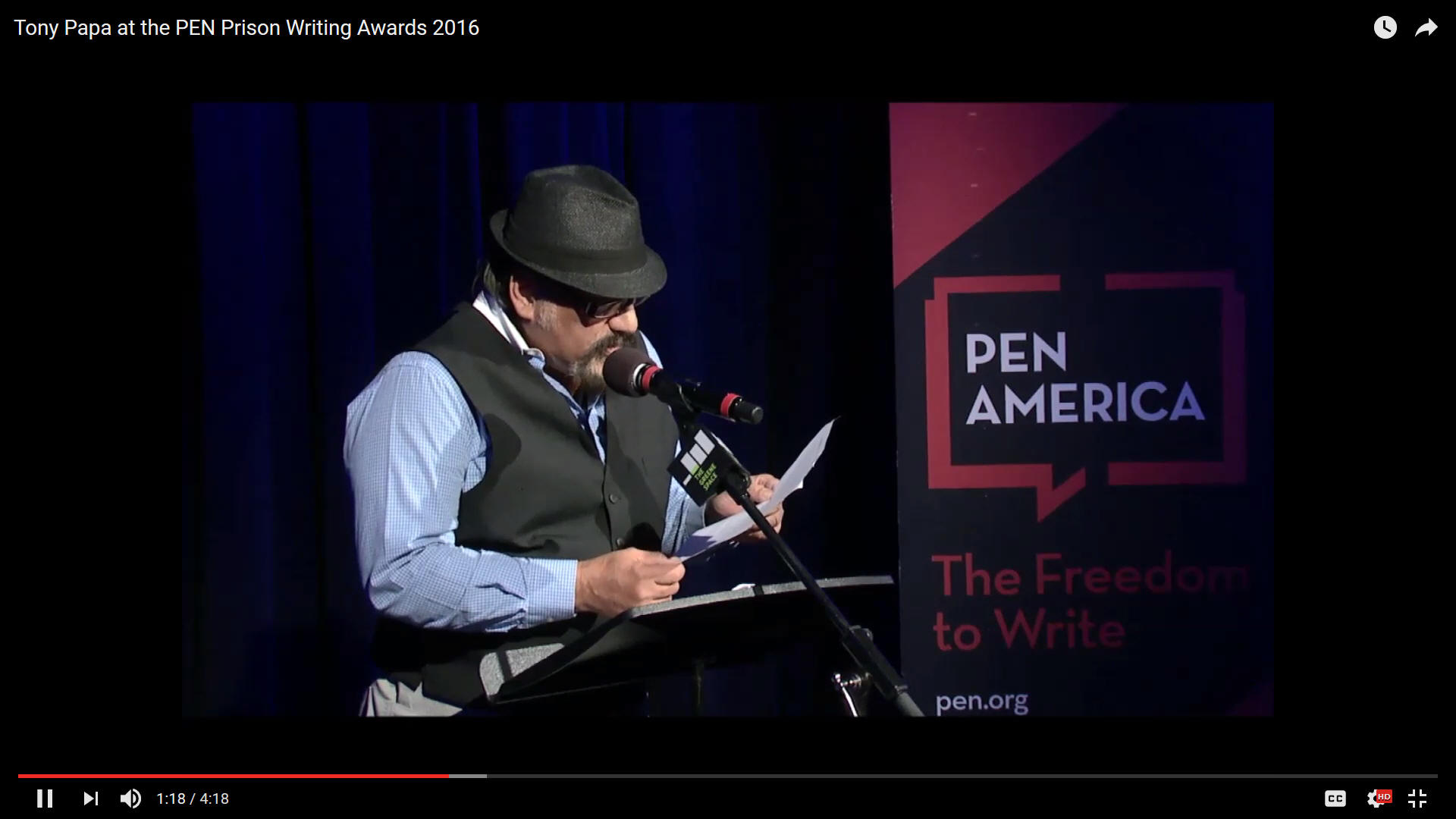
Cultural
Baggage Radio Show/ 5/6/16/Tony Papa, Mgr of
Media relations at DPA has a new book This Side of Freedom
www.drugtruth.net/cms/audio/download/5813/FDBCB_050616.mp3
Transcript

Let
Them Talk/8/10/16/Anthony Papa advocate against the war on drugs ( video
interview)
KBOO Prison Pipeline Radio Interview 8/1/2016
http://www.kboo.fm/media/51399-side-freedom

Regaining life after prison a burden with new strugglesBy Anthony Papa,
Commentary December 13, 2016
15 Years To Life – Anthony Papa – 12-Step Radio: Addiction, R
ecovery. Steppin' Out Radio
6/25/16/
goo.gl/dhfwEZ

ALBANY TIMES UNION
http://www.timesunion.com/tuplus-opinion/article/Regaining-life-after-prison-a-burden-with-new-10793935.php?cmpid=twitter-desktop
Regaining life after prison a
burden with new struggles
By Anthony Papa, Commentary
Published
4:25 pm, Tuesday, December 13, 2016
Recently, the
Department of Corrections and Community Supervision Acting
Commissioner
Anthony Annucci accepted the donation of my new memoir "This
Side of Freedom: Life after Clemency," to be placed in all 54
general libraries in New York state prisons.
Annucci and several members of his staff reviewed the book and
concluded that it would be a useful resource and guide for general
population inmates as they contemplate the challenges that lie ahead
when they are released to the community.
In 1985, I was sentenced as a first-time nonviolent offender to
15 years-to-life under the
Rockefeller Drug Laws. I served time at Sing Sing Correctional
Facility in Ossining. It was there I became part of the prison
labyrinth and spent the next 12 years, until I was granted executive
clemency by Gov.
George Pataki in 1997.
Anthony Papa of New York City is the manager of media
and artist relations for the Drug Policy Alliance.
http://www.15yearstolife.com/
I went on to write my first memoir, "15 to Life: How I Painted my
Way to Freedom," a story that captured my prison experience. Now,
with my new offering, I talk about my 19 years of freedom and the
struggle I have trying to re-enter society as a taxpaying,
law-abiding citizen.
Formerly incarcerated people re-entering society face a daunting
array of problems that prevent them from successfully reintegrating.
These include not being able to find employment or secure housing,
dealing with substance abuse and mental health problems, and
difficulties in re-establishing and developing relationships.
On top of this, they also must face counterproductive and
debilitating legal and practical barriers, including state and
federal laws that hinder their ability to qualify for a job or get a
higher education.
Because of this, many communities have struggled to handle the
astonishing increase of people from prison. At the policy level,
lawmakers are forced into questioning the Draconian drug policies of
the past and are calling for solutions to ensure released prisoners
can become productive members of society.
Millions of individuals have been sent to prison under the
incarceration boom of the 1980s and '90s that was largely the result
of Draconian drug sentencing laws. The "tough-on-crime" era
coincided with massive cuts to prison programs.
I was lucky enough to receive three college degrees while I was
incarcerated, including a master's from New York Theological
Seminary. I prepared myself for my eventual release.
My book stresses the importance of gaining an education and
taking advantage of existing rehabilitative programs while in
prison.
I wanted to write a book about the struggle one faces when
released from prison. When I came home, I soon realized that I did
not leave behind my 12 years of hard time. When you leave prison,
you are not free. You are still doing time, just doing it on the
other side of the bars.
I soon found out that prison life was deeply rooted in my present
existence, a decade of life in an environment where survival
mechanisms and behaviors were hardwired into my daily existence.
Being hardwired for survival was a good thing in prison, but in the
free world it was another matter, especially when those mechanisms
would surface suddenly and without warning. The tools that were once
lifesaving had become a tremendous burden as I tried to get my life
back together.
In prison, I was beat down, piped and stabbed, but nothing hurt
me more than my separation from my daughter Stephanie, who I left at
age 7. When I tried to reunite with her, she was 19 years old and
found me to be a complete stranger. I struggled with the most
mundane tasks and realized that my support base was gone and I was
alone in a new world that had drastically changed without me.
No longer guided by the paternal benefits of institutional
dependency, I found roadblocks at every level of existence.
For many, including myself, carrying the stigma of being an
ex-offender is often debilitating. "This Side of Freedom: Life after
Clemency," is a much-needed book that will help those incarcerated
know what they will face when they are released, and also help those
who are free understand the struggle the formerly incarcerated face
as they try to regain their roles as productive citizens.
The Rooster

A
former prisoner explains ‘what now’ for America
By Brian Frederick
November 29, 2016
http://www.therooster.com/blog/former-prisoner-explains-%E2%80%98what-now%E2%80%99-america
Anthony
“Tony” Papa once spent 12 years behind bars for a small crime he committed
in a time of weakness. He did so to come up on “some easy money,“ and
readily admits it was one of the worst mistakes he’s ever made. He now
spends every waking hour of his life as an activist against mandatory drug
sentencing laws, with a concentration on educating ex-cons so they have a
better chance of never landing in trouble again while they’re free — like so
many of them often do.
And
much like millions of others in America, he’s worried about the future of
the country.
“We
have to look at the reality of the situation,” Papa says of the election
results. “This whole Trump thing took everyone by surprise, so now we just
gotta deal with it.”
He says
he and the
Drug Policy Alliance (where he’s worked for over a decade now) have made
tremendous strides in the fight against mandatory sentencing for non-violent
offenders. It hasn’t exactly been easy doing so during the past two terms
with Barrack Obama in office, but could grow even more difficult with the
newly chosen sheriff in town.
That’s
because President-elect Donald Trump has named a few worrisome men to fill
key positions in his administration. One scares Papa the most. His name is
Jeff Sessions, and he’s likely to become America’s next Attorney General.
He’s also about the worst possible choice for anyone in the position of
fighting for equal rights and lightening the load on non-violent drug
offenders.
However, it’s a fight that Papa and his team plan on continuing, even in the
face of extreme complications.
“We’re
trying to rally the troops,” he explains. “We’re getting everybody we can in
all realms of activism, of civil rights, against the drug war, and speak out
and get everybody to rally to stop this guy from becoming the Attorney
General.”
Sessions is frightening to many like Papa because of his hard stance on
drugs and the law. He admits to
hating marijuana , is cool with
controversial stop and frisk laws (that have already been
deemed unconstitutional) and relies heavily on misinformation about the
dangers of
drugs .
Bill
Piper, senior director of the Drug Policy Alliance’s office of National
Affairs in Washington D.C., agrees with Papa’s feelings toward Sessions. In
a
recent media teleconference, he points out the devastating effects a
Sessions ran office could have on already structured policies helping battle
the war on drugs.
“[Sessions] recently described marijuana as a dangerous drug, said ‘good
people don’t smoke marijuana,’ and has criticized the Obama administration
for respecting state marijuana laws,” he said. “If confirmed as U.S.
Attorney General, Jeff Sessions could
escalate
the failed war on drugs. He will likely use his position to oppose any kind
of sentencing or criminal justice reform. He could undo the important
changes Eric Holder made including expanding the use of mandatory minimum
sentencing and reversing course on important consent decrees.”
He
scares many, but at this point, the fears all surround only speculation on
what these men can and can not do with their positions. It won’t be until
January, when all members are sworn in and given the keys to their
respective offices, that the country will finally be able to feel the
temperature of the pot it's gotten itself into.
Even
still, Papa at least remains hopeful that a Trump administration would have
little impact on the gray area that forever haunts the cannabis industry. He
says it’s too locked into our culture right now for him to be able to do
anything — at least that’s what he’s betting on anyway.
“Trump’s a businessman,” he says. “It’s so far into the American lifestyle.
I mean, 7 more states voted it in. You’ll have a civil war if he tries to
pull it back. So many people and businesses are in it.”
He’s
just going to continue on with his many projects he’s working on right now,
such as the
Prison Letter Project(of which he says he has thousands of messages
from prisoners telling their own stories about the failed justice system),
and expanding his Prison Library Project after receiving a substantial grant
to continue teaching men and women how to survive in a world built for them
to fail.
“I’m
trying to reduce massive incarceration by education, by educating prisoners
before they come out, to prepare them and thus reducing recidivism,” he
says. “That’s my attempt to reduce mass incarceration.”
He’s
also altering his title at the DPA by incorporating art into the fight
against injustice — something he learned while locked up himself.
“It’s a
hard sell,” he admits, “but you know what, I’m doing it.”
Create.
Educate. Fight. It’s all anyone can do at this point, says Papa.
A former prisoner explains ‘what now’ for America
VicesNovember
29, 2016 By Brian Frederick
Anthony “Tony” Papa once spent 12 years behind bars for a small crime
he committed in a time of weakness. He did so to come up on “some easy
money,“ and readily admits it was one of the worst mistakes he’s ever
made. He now spends every waking hour of his life as an activist against
mandatory drug sentencing laws, with a concentration on educating
ex-cons so they have a better chance of never landing in trouble again
while they’re free — like so many of them often do.
And much like millions of others in America, he’s worried about the
future of the country.
“We have to look at the reality of the situation,” Papa says of the
election results. “This whole Trump thing took everyone by surprise, so
now we just gotta deal with it.”
He says he and the
Drug Policy
Alliance (where he’s worked for over a decade now) have made
tremendous strides in the fight against mandatory sentencing for
non-violent offenders. It hasn’t exactly been easy doing so during the
past two terms with Barrack Obama in office, but could grow even more
difficult with the newly chosen sheriff in town.
That’s because President-elect Donald Trump has named a few worrisome
men to fill key positions in his administration. One scares Papa the
most. His name is Jeff Sessions, and he’s likely to become America’s
next Attorney General. He’s also about the worst possible choice for
anyone in the position of fighting for equal rights and lightening the
load on non-violent drug offenders.
However, it’s a fight that Papa and his team plan on continuing, even
in the face of extreme complications.
“We’re trying to rally the troops,” he explains. “We’re getting
everybody we can in all realms of activism, of civil rights, against the
drug war, and speak out and get everybody to rally to stop this guy from
becoming the Attorney General.”
Sessions is frightening to many like Papa because of his hard stance
on drugs and the law. He admits to
hating marijuana, is cool with
controversial “stop and frisk” laws (that have already been
deemed unconstitutional) and relies heavily on misinformation about
the
dangers of drugs.
Bill Piper, senior director of the Drug Policy Alliance’s office of
National Affairs in Washington D.C., agrees with Papa’s feelings toward
Sessions. In a
recent media teleconference, he points out the devastating effects a
Sessions ran office could have on already structured policies helping
battle the war on drugs.
“[Sessions] recently described marijuana as a dangerous drug, said
‘good people don’t smoke marijuana,’ and has criticized the Obama
administration for respecting state marijuana laws,” he said. “If
confirmed as U.S. Attorney General, Jeff Sessions could escalate
the failed war on drugs. He will likely use his position to oppose any
kind of sentencing or criminal justice reform. He could undo the
important changes Eric Holder made including expanding the use of
mandatory minimum sentencing and reversing course on important consent
decrees.”
He scares many, but at this point, the fears all surround only
speculation on what these men can and can not do with their positions.
It won’t be until January, when all members are sworn in and given the
keys to their respective offices, that the country will finally be able
to feel the temperature of the pot it's gotten itself into.
Even still, Papa at least remains hopeful that a Trump administration
would have little impact on the gray area that forever haunts the
cannabis industry. He says it’s too locked into our culture right now
for him to be able to do anything — at least that’s what he’s betting on
anyway.
“Trump’s a businessman,” he says. “It’s so far into the American
lifestyle. I mean, 7 more states voted it in. You’ll have a civil war if
he tries to pull it back. So many people and businesses are in it.”
He’s just going to continue on with his many projects he’s working on
right now, such as the
Prison Letter
Project (of which he says he has thousands of messages from
prisoners telling their own stories about the failed justice system),
and expanding his Prison Library Project after receiving a substantial
grant to continue teaching men and women how to survive in a world built
for them to fail.
“I’m trying to reduce massive incarceration by education, by
educating prisoners before they come out, to prepare them and thus
reducing recidivism,” he says. “That’s my attempt to reduce mass
incarceration.”
He’s also altering his title at the DPA by incorporating art into the
fight against injustice — something he learned while locked up himself.
“It’s a hard sell,” he admits, “but you know what, I’m doing it.”
Create. Educate. Fight. It’s all anyone can do at this point, says
Papa.
- See more at: http://www.therooster.com/blog/former-prisoner-explains-%E2%80%98what-now%E2%80%99-america#sthash.OZJWjmsK.dpuf
Anthony “Tony” Papa once spent 12 years behind bars for a small crime he
committed in a time of weakness. He did so to come up on “some easy
money,“ and readily admits it was one of the worst mistakes he’s ever
made. He now spends every waking hour of his life as an activist against
mandatory drug sentencing laws, with a concentration on educating
ex-cons so they have a better chance of never landing in trouble again
while they’re free — like so many of them often do.
And much like
millions of others in America, he’s worried about the future of the
country.
“We have to look at the reality of the situation,” Papa says of the
election results. “This whole Trump thing took everyone by surprise, so
now we just gotta deal with it.”
He says he and the
Drug Policy
Alliance (where he’s worked for over a decade now) have made
tremendous strides in the fight against mandatory sentencing for
non-violent offenders. It hasn’t exactly been easy doing so during the
past two terms with Barrack Obama in office, but could grow even more
difficult with the newly chosen sheriff in town.
That’s because President-elect Donald Trump has named a few worrisome
men to fill key positions in his administration. One scares Papa the
most. His name is Jeff Sessions, and he’s likely to become America’s
next Attorney General. He’s also about the worst possible choice for
anyone in the position of fighting for equal rights and lightening the
load on non-violent drug offenders.
However, it’s a fight that Papa and his team plan on continuing, even
in the face of extreme complications.
“We’re trying to rally the troops,” he explains. “We’re getting
everybody we can in all realms of activism, of civil rights, against the
drug war, and speak out and get everybody to rally to stop this guy from
becoming the Attorney General.”
Sessions is frightening to many like Papa because of his hard stance
on drugs and the law. He admits to
hating marijuana, is cool with
controversial “stop and frisk” laws (that have already been
deemed unconstitutional) and relies heavily on misinformation about
the
dangers of drugs.
Bill Piper, senior director of the Drug Policy Alliance’s office of
National Affairs in Washington D.C., agrees with Papa’s feelings toward
Sessions. In a
recent media teleconference, he points out the devastating effects a
Sessions ran office could have on already structured policies helping
battle the war on drugs.
“[Sessions] recently described marijuana as a dangerous drug, said
‘good people don’t smoke marijuana,’ and has criticized the Obama
administration for respecting state marijuana laws,” he said. “If
confirmed as U.S. Attorney General, Jeff Sessions could escalate
the failed war on drugs. He will likely use his position to oppose any
kind of sentencing or criminal justice reform. He could undo the
important changes Eric Holder made including expanding the use of
mandatory minimum sentencing and reversing course on important consent
decrees.”
He scares many, but at this point, the fears all surround only
speculation on what these men can and can not do with their positions.
It won’t be until January, when all members are sworn in and given the
keys to their respective offices, that the country will finally be able
to feel the temperature of the pot it's gotten itself into.
Even still, Papa at least remains hopeful that a Trump administration
would have little impact on the gray area that forever haunts the
cannabis industry. He says it’s too locked into our culture right now
for him to be able to do anything — at least that’s what he’s betting on
anyway.
“Trump’s a businessman,” he says. “It’s so far into the American
lifestyle. I mean, 7 more states voted it in. You’ll have a civil war if
he tries to pull it back. So many people and businesses are in it.”
He’s just going to continue on with his many projects he’s working on
right now, such as the
Prison Letter
Project (of which he says he has thousands of messages from
prisoners telling their own stories about the failed justice system),
and expanding his Prison Library Project after receiving a substantial
grant to continue teaching men and women how to survive in a world built
for them to fail.
“I’m trying to reduce massive incarceration by education, by
educating prisoners before they come out, to prepare them and thus
reducing recidivism,” he says. “That’s my attempt to reduce mass
incarceration.”
He’s also altering his title at the DPA by incorporating art into the
fight against injustice — something he learned while locked up himself.
“It’s a hard sell,” he admits, “but you know what, I’m doing it.”
Create. Educate. Fight. It’s all anyone can do at this point, says
Papa.
- See more at: http://www.therooster.com/blog/former-prisoner-explains-%E2%80%98what-now%E2%80%99-america#sthash.OZJWjmsK.dpuf
A former prisoner explains ‘what now’ for America
VicesNovember
29, 2016 By Brian Frederick
Anthony “Tony” Papa once spent 12 years behind bars for a small crime
he committed in a time of weakness. He did so to come up on “some easy
money,“ and readily admits it was one of the worst mistakes he’s ever
made. He now spends every waking hour of his life as an activist against
mandatory drug sentencing laws, with a concentration on educating
ex-cons so they have a better chance of never landing in trouble again
while they’re free — like so many of them often do.
And much like millions of others in America, he’s worried about the
future of the country.
“We have to look at the reality of the situation,” Papa says of the
election results. “This whole Trump thing took everyone by surprise, so
now we just gotta deal with it.”
He says he and the
Drug Policy
Alliance (where he’s worked for over a decade now) have made
tremendous strides in the fight against mandatory sentencing for
non-violent offenders. It hasn’t exactly been easy doing so during the
past two terms with Barrack Obama in office, but could grow even more
difficult with the newly chosen sheriff in town.
That’s because President-elect Donald Trump has named a few worrisome
men to fill key positions in his administration. One scares Papa the
most. His name is Jeff Sessions, and he’s likely to become America’s
next Attorney General. He’s also about the worst possible choice for
anyone in the position of fighting for equal rights and lightening the
load on non-violent drug offenders.
However, it’s a fight that Papa and his team plan on continuing, even
in the face of extreme complications.
“We’re trying to rally the troops,” he explains. “We’re getting
everybody we can in all realms of activism, of civil rights, against the
drug war, and speak out and get everybody to rally to stop this guy from
becoming the Attorney General.”
Sessions is frightening to many like Papa because of his hard stance
on drugs and the law. He admits to
hating marijuana, is cool with
controversial “stop and frisk” laws (that have already been
deemed unconstitutional) and relies heavily on misinformation about
the
dangers of drugs.
Bill Piper, senior director of the Drug Policy Alliance’s office of
National Affairs in Washington D.C., agrees with Papa’s feelings toward
Sessions. In a
recent media teleconference, he points out the devastating effects a
Sessions ran office could have on already structured policies helping
battle the war on drugs.
“[Sessions] recently described marijuana as a dangerous drug, said
‘good people don’t smoke marijuana,’ and has criticized the Obama
administration for respecting state marijuana laws,” he said. “If
confirmed as U.S. Attorney General, Jeff Sessions could escalate
the failed war on drugs. He will likely use his position to oppose any
kind of sentencing or criminal justice reform. He could undo the
important changes Eric Holder made including expanding the use of
mandatory minimum sentencing and reversing course on important consent
decrees.”
He scares many, but at this point, the fears all surround only
speculation on what these men can and can not do with their positions.
It won’t be until January, when all members are sworn in and given the
keys to their respective offices, that the country will finally be able
to feel the temperature of the pot it's gotten itself into.
Even still, Papa at least remains hopeful that a Trump administration
would have little impact on the gray area that forever haunts the
cannabis industry. He says it’s too locked into our culture right now
for him to be able to do anything — at least that’s what he’s betting on
anyway.
“Trump’s a businessman,” he says. “It’s so far into the American
lifestyle. I mean, 7 more states voted it in. You’ll have a civil war if
he tries to pull it back. So many people and businesses are in it.”
He’s just going to continue on with his many projects he’s working on
right now, such as the
Prison Letter
Project (of which he says he has thousands of messages from
prisoners telling their own stories about the failed justice system),
and expanding his Prison Library Project after receiving a substantial
grant to continue teaching men and women how to survive in a world built
for them to fail.
“I’m trying to reduce massive incarceration by education, by
educating prisoners before they come out, to prepare them and thus
reducing recidivism,” he says. “That’s my attempt to reduce mass
incarceration.”
He’s also altering his title at the DPA by incorporating art into the
fight against injustice — something he learned while locked up himself.
“It’s a hard sell,” he admits, “but you know what, I’m doing it.”
Create. Educate. Fight. It’s all anyone can do at this point, says
Papa.
- See more at: http://www.therooster.com/blog/former-prisoner-explains-%E2%80%98what-now%E2%80%99-america#sthash.OZJWjmsK.dpuf
A former prisoner explains ‘what now’ for America
VicesNovember
29, 2016 By Brian Frederick
Anthony “Tony” Papa once spent 12 years behind bars for a small crime
he committed in a time of weakness. He did so to come up on “some easy
money,“ and readily admits it was one of the worst mistakes he’s ever
made. He now spends every waking hour of his life as an activist against
mandatory drug sentencing laws, with a concentration on educating
ex-cons so they have a better chance of never landing in trouble again
while they’re free — like so many of them often do.
And much like millions of others in America, he’s worried about the
future of the country.
“We have to look at the reality of the situation,” Papa says of the
election results. “This whole Trump thing took everyone by surprise, so
now we just gotta deal with it.”
He says he and the
Drug Policy
Alliance (where he’s worked for over a decade now) have made
tremendous strides in the fight against mandatory sentencing for
non-violent offenders. It hasn’t exactly been easy doing so during the
past two terms with Barrack Obama in office, but could grow even more
difficult with the newly chosen sheriff in town.
That’s because President-elect Donald Trump has named a few worrisome
men to fill key positions in his administration. One scares Papa the
most. His name is Jeff Sessions, and he’s likely to become America’s
next Attorney General. He’s also about the worst possible choice for
anyone in the position of fighting for equal rights and lightening the
load on non-violent drug offenders.
However, it’s a fight that Papa and his team plan on continuing, even
in the face of extreme complications.
“We’re trying to rally the troops,” he explains. “We’re getting
everybody we can in all realms of activism, of civil rights, against the
drug war, and speak out and get everybody to rally to stop this guy from
becoming the Attorney General.”
Sessions is frightening to many like Papa because of his hard stance
on drugs and the law. He admits to
hating marijuana, is cool with
controversial “stop and frisk” laws (that have already been
deemed unconstitutional) and relies heavily on misinformation about
the
dangers of drugs.
Bill Piper, senior director of the Drug Policy Alliance’s office of
National Affairs in Washington D.C., agrees with Papa’s feelings toward
Sessions. In a
recent media teleconference, he points out the devastating effects a
Sessions ran office could have on already structured policies helping
battle the war on drugs.
“[Sessions] recently described marijuana as a dangerous drug, said
‘good people don’t smoke marijuana,’ and has criticized the Obama
administration for respecting state marijuana laws,” he said. “If
confirmed as U.S. Attorney General, Jeff Sessions could escalate
the failed war on drugs. He will likely use his position to oppose any
kind of sentencing or criminal justice reform. He could undo the
important changes Eric Holder made including expanding the use of
mandatory minimum sentencing and reversing course on important consent
decrees.”
He scares many, but at this point, the fears all surround only
speculation on what these men can and can not do with their positions.
It won’t be until January, when all members are sworn in and given the
keys to their respective offices, that the country will finally be able
to feel the temperature of the pot it's gotten itself into.
Even still, Papa at least remains hopeful that a Trump administration
would have little impact on the gray area that forever haunts the
cannabis industry. He says it’s too locked into our culture right now
for him to be able to do anything — at least that’s what he’s betting on
anyway.
“Trump’s a businessman,” he says. “It’s so far into the American
lifestyle. I mean, 7 more states voted it in. You’ll have a civil war if
he tries to pull it back. So many people and businesses are in it.”
He’s just going to continue on with his many projects he’s working on
right now, such as the
Prison Letter
Project (of which he says he has thousands of messages from
prisoners telling their own stories about the failed justice system),
and expanding his Prison Library Project after receiving a substantial
grant to continue teaching men and women how to survive in a world built
for them to fail.
“I’m trying to reduce massive incarceration by education, by
educating prisoners before they come out, to prepare them and thus
reducing recidivism,” he says. “That’s my attempt to reduce mass
incarceration.”
He’s also altering his title at the DPA by incorporating art into the
fight against injustice — something he learned while locked up himself.
“It’s a hard sell,” he admits, “but you know what, I’m doing it.”
Create. Educate. Fight. It’s all anyone can do at this point, says
Papa.
- See more at: http://www.therooster.com/blog/former-prisoner-explains-%E2%80%98what-now%E2%80%99-america#sthash.OZJWjmsK.dpuf
A former prisoner explains ‘what now’ for America
VicesNovember
29, 2016 By Brian Frederick
Anthony “Tony” Papa once spent 12 years behind bars for a small crime
he committed in a time of weakness. He did so to come up on “some easy
money,“ and readily admits it was one of the worst mistakes he’s ever
made. He now spends every waking hour of his life as an activist against
mandatory drug sentencing laws, with a concentration on educating
ex-cons so they have a better chance of never landing in trouble again
while they’re free — like so many of them often do.
And much like millions of others in America, he’s worried about the
future of the country.
“We have to look at the reality of the situation,” Papa says of the
election results. “This whole Trump thing took everyone by surprise, so
now we just gotta deal with it.”
He says he and the
Drug Policy
Alliance (where he’s worked for over a decade now) have made
tremendous strides in the fight against mandatory sentencing for
non-violent offenders. It hasn’t exactly been easy doing so during the
past two terms with Barrack Obama in office, but could grow even more
difficult with the newly chosen sheriff in town.
That’s because President-elect Donald Trump has named a few worrisome
men to fill key positions in his administration. One scares Papa the
most. His name is Jeff Sessions, and he’s likely to become America’s
next Attorney General. He’s also about the worst possible choice for
anyone in the position of fighting for equal rights and lightening the
load on non-violent drug offenders.
However, it’s a fight that Papa and his team plan on continuing, even
in the face of extreme complications.
“We’re trying to rally the troops,” he explains. “We’re getting
everybody we can in all realms of activism, of civil rights, against the
drug war, and speak out and get everybody to rally to stop this guy from
becoming the Attorney General.”
Sessions is frightening to many like Papa because of his hard stance
on drugs and the law. He admits to
hating marijuana, is cool with
controversial “stop and frisk” laws (that have already been
deemed unconstitutional) and relies heavily on misinformation about
the
dangers of drugs.
Bill Piper, senior director of the Drug Policy Alliance’s office of
National Affairs in Washington D.C., agrees with Papa’s feelings toward
Sessions. In a
recent media teleconference, he points out the devastating effects a
Sessions ran office could have on already structured policies helping
battle the war on drugs.
“[Sessions] recently described marijuana as a dangerous drug, said
‘good people don’t smoke marijuana,’ and has criticized the Obama
administration for respecting state marijuana laws,” he said. “If
confirmed as U.S. Attorney General, Jeff Sessions could escalate
the failed war on drugs. He will likely use his position to oppose any
kind of sentencing or criminal justice reform. He could undo the
important changes Eric Holder made including expanding the use of
mandatory minimum sentencing and reversing course on important consent
decrees.”
He scares many, but at this point, the fears all surround only
speculation on what these men can and can not do with their positions.
It won’t be until January, when all members are sworn in and given the
keys to their respective offices, that the country will finally be able
to feel the temperature of the pot it's gotten itself into.
Even still, Papa at least remains hopeful that a Trump administration
would have little impact on the gray area that forever haunts the
cannabis industry. He says it’s too locked into our culture right now
for him to be able to do anything — at least that’s what he’s betting on
anyway.
“Trump’s a businessman,” he says. “It’s so far into the American
lifestyle. I mean, 7 more states voted it in. You’ll have a civil war if
he tries to pull it back. So many people and businesses are in it.”
He’s just going to continue on with his many projects he’s working on
right now, such as the
Prison Letter
Project (of which he says he has thousands of messages from
prisoners telling their own stories about the failed justice system),
and expanding his Prison Library Project after receiving a substantial
grant to continue teaching men and women how to survive in a world built
for them to fail.
“I’m trying to reduce massive incarceration by education, by
educating prisoners before they come out, to prepare them and thus
reducing recidivism,” he says. “That’s my attempt to reduce mass
incarceration.”
He’s also altering his title at the DPA by incorporating art into the
fight against injustice — something he learned while locked up himself.
“It’s a hard sell,” he admits, “but you know what, I’m doing it.”
Create. Educate. Fight. It’s all anyone can do at this point, says
Papa.
- See more at: http://www.therooster.com/blog/former-prisoner-explains-%E2%80%98what-now%E2%80%99-america#sthash.OZJWjmsK.dpuf
A former prisoner explains ‘what now’ for America
VicesNovember
29, 2016 By Brian Frederick
Anthony “Tony” Papa once spent 12 years behind bars for a small crime
he committed in a time of weakness. He did so to come up on “some easy
money,“ and readily admits it was one of the worst mistakes he’s ever
made. He now spends every waking hour of his life as an activist against
mandatory drug sentencing laws, with a concentration on educating
ex-cons so they have a better chance of never landing in trouble again
while they’re free — like so many of them often do.
And much like millions of others in America, he’s worried about the
future of the country.
“We have to look at the reality of the situation,” Papa says of the
election results. “This whole Trump thing took everyone by surprise, so
now we just gotta deal with it.”
He says he and the
Drug Policy
Alliance (where he’s worked for over a decade now) have made
tremendous strides in the fight against mandatory sentencing for
non-violent offenders. It hasn’t exactly been easy doing so during the
past two terms with Barrack Obama in office, but could grow even more
difficult with the newly chosen sheriff in town.
That’s because President-elect Donald Trump has named a few worrisome
men to fill key positions in his administration. One scares Papa the
most. His name is Jeff Sessions, and he’s likely to become America’s
next Attorney General. He’s also about the worst possible choice for
anyone in the position of fighting for equal rights and lightening the
load on non-violent drug offenders.
However, it’s a fight that Papa and his team plan on continuing, even
in the face of extreme complications.
“We’re trying to rally the troops,” he explains. “We’re getting
everybody we can in all realms of activism, of civil rights, against the
drug war, and speak out and get everybody to rally to stop this guy from
becoming the Attorney General.”
Sessions is frightening to many like Papa because of his hard stance
on drugs and the law. He admits to
hating marijuana, is cool with
controversial “stop and frisk” laws (that have already been
deemed unconstitutional) and relies heavily on misinformation about
the
dangers of drugs.
Bill Piper, senior director of the Drug Policy Alliance’s office of
National Affairs in Washington D.C., agrees with Papa’s feelings toward
Sessions. In a
recent media teleconference, he points out the devastating effects a
Sessions ran office could have on already structured policies helping
battle the war on drugs.
“[Sessions] recently described marijuana as a dangerous drug, said
‘good people don’t smoke marijuana,’ and has criticized the Obama
administration for respecting state marijuana laws,” he said. “If
confirmed as U.S. Attorney General, Jeff Sessions could escalate
the failed war on drugs. He will likely use his position to oppose any
kind of sentencing or criminal justice reform. He could undo the
important changes Eric Holder made including expanding the use of
mandatory minimum sentencing and reversing course on important consent
decrees.”
He scares many, but at this point, the fears all surround only
speculation on what these men can and can not do with their positions.
It won’t be until January, when all members are sworn in and given the
keys to their respective offices, that the country will finally be able
to feel the temperature of the pot it's gotten itself into.
Even still, Papa at least remains hopeful that a Trump administration
would have little impact on the gray area that forever haunts the
cannabis industry. He says it’s too locked into our culture right now
for him to be able to do anything — at least that’s what he’s betting on
anyway.
“Trump’s a businessman,” he says. “It’s so far into the American
lifestyle. I mean, 7 more states voted it in. You’ll have a civil war if
he tries to pull it back. So many people and businesses are in it.”
He’s just going to continue on with his many projects he’s working on
right now, such as the
Prison Letter
Project (of which he says he has thousands of messages from
prisoners telling their own stories about the failed justice system),
and expanding his Prison Library Project after receiving a substantial
grant to continue teaching men and women how to survive in a world built
for them to fail.
“I’m trying to reduce massive incarceration by education, by
educating prisoners before they come out, to prepare them and thus
reducing recidivism,” he says. “That’s my attempt to reduce mass
incarceration.”
He’s also altering his title at the DPA by incorporating art into the
fight against injustice — something he learned while locked up himself.
“It’s a hard sell,” he admits, “but you know what, I’m doing it.”
Create. Educate. Fight. It’s all anyone can do at this point, says
Papa.
- See more at: http://www.therooster.com/blog/former-prisoner-explains-%E2%80%98what-now%E2%80%99-america#sthash.OZJWjmsK.dpuf
A former prisoner explains ‘what now’ for America
VicesNovember
29, 2016 By Brian Frederick
Anthony “Tony” Papa once spent 12 years behind bars for a small crime
he committed in a time of weakness. He did so to come up on “some easy
money,“ and readily admits it was one of the worst mistakes he’s ever
made. He now spends every waking hour of his life as an activist against
mandatory drug sentencing laws, with a concentration on educating
ex-cons so they have a better chance of never landing in trouble again
while they’re free — like so many of them often do.
And much like millions of others in America, he’s worried about the
future of the country.
“We have to look at the reality of the situation,” Papa says of the
election results. “This whole Trump thing took everyone by surprise, so
now we just gotta deal with it.”
He says he and the
Drug Policy
Alliance (where he’s worked for over a decade now) have made
tremendous strides in the fight against mandatory sentencing for
non-violent offenders. It hasn’t exactly been easy doing so during the
past two terms with Barrack Obama in office, but could grow even more
difficult with the newly chosen sheriff in town.
That’s because President-elect Donald Trump has named a few worrisome
men to fill key positions in his administration. One scares Papa the
most. His name is Jeff Sessions, and he’s likely to become America’s
next Attorney General. He’s also about the worst possible choice for
anyone in the position of fighting for equal rights and lightening the
load on non-violent drug offenders.
However, it’s a fight that Papa and his team plan on continuing, even
in the face of extreme complications.
“We’re trying to rally the troops,” he explains. “We’re getting
everybody we can in all realms of activism, of civil rights, against the
drug war, and speak out and get everybody to rally to stop this guy from
becoming the Attorney General.”
Sessions is frightening to many like Papa because of his hard stance
on drugs and the law. He admits to
hating marijuana, is cool with
controversial “stop and frisk” laws (that have already been
deemed unconstitutional) and relies heavily on misinformation about
the
dangers of drugs.
Bill Piper, senior director of the Drug Policy Alliance’s office of
National Affairs in Washington D.C., agrees with Papa’s feelings toward
Sessions. In a
recent media teleconference, he points out the devastating effects a
Sessions ran office could have on already structured policies helping
battle the war on drugs.
“[Sessions] recently described marijuana as a dangerous drug, said
‘good people don’t smoke marijuana,’ and has criticized the Obama
administration for respecting state marijuana laws,” he said. “If
confirmed as U.S. Attorney General, Jeff Sessions could escalate
the failed war on drugs. He will likely use his position to oppose any
kind of sentencing or criminal justice reform. He could undo the
important changes Eric Holder made including expanding the use of
mandatory minimum sentencing and reversing course on important consent
decrees.”
He scares many, but at this point, the fears all surround only
speculation on what these men can and can not do with their positions.
It won’t be until January, when all members are sworn in and given the
keys to their respective offices, that the country will finally be able
to feel the temperature of the pot it's gotten itself into.
Even still, Papa at least remains hopeful that a Trump administration
would have little impact on the gray area that forever haunts the
cannabis industry. He says it’s too locked into our culture right now
for him to be able to do anything — at least that’s what he’s betting on
anyway.
“Trump’s a businessman,” he says. “It’s so far into the American
lifestyle. I mean, 7 more states voted it in. You’ll have a civil war if
he tries to pull it back. So many people and businesses are in it.”
He’s just going to continue on with his many projects he’s working on
right now, such as the
Prison Letter
Project (of which he says he has thousands of messages from
prisoners telling their own stories about the failed justice system),
and expanding his Prison Library Project after receiving a substantial
grant to continue teaching men and women how to survive in a world built
for them to fail.
“I’m trying to reduce massive incarceration by education, by
educating prisoners before they come out, to prepare them and thus
reducing recidivism,” he says. “That’s my attempt to reduce mass
incarceration.”
He’s also altering his title at the DPA by incorporating art into the
fight against injustice — something he learned while locked up himself.
“It’s a hard sell,” he admits, “but you know what, I’m doing it.”
Create. Educate. Fight. It’s all anyone can do at this point, says
Papa.
- See more at: http://www.therooster.com/blog/former-prisoner-explains-%E2%80%98what-now%E2%80%99-america#sthash.OZJWjmsK.dpuf
The Fix
Gov. Cuomo Pardons Drug Reformer Anthony Papa, Issues Dozens
of Clemencies
By
Keri Blakinger
01/03/17
Since
his release in the late '90s, Papa has published two books and works at the
Drug Policy Alliance.
Mario
Cuomo, Anthony Papa and Andrew Cuomo back in 2004.
Photo used with the permission of Anthony Papa
https://www.thefix.com/gov-cuomo-pardons-drug-reformer-anthony-papa-issues-dozens-clemencies
By
Keri Blakinger 01/03/17
Since his release in the late '90s, Papa has published two books
and works at the Drug Policy Alliance.
Mario Cuomo, Anthony Papa and
Andrew Cuomo back in 2004. Photo used with the
permission of Anthony Papa
Gov. Andrew Cuomo on Friday granted 101 conditional pardons and 12 other
clemencies —including a
pardon to drug-reform activist Anthony Papa.
Convicted of a first time drug offense in 1985, Papa served 12 years
under draconian Rockefeller Drug Laws before he was released and went on
to work at the Drug Policy Alliance. Now with the newly announced
pardon, the 62-year-old former prisoner will be able to enjoy the
restoration of some of the many rights forfeited after a felony
conviction.
“Being granted the pardon was a vindication for me in that it showed
that my punishment did not fit the crime,” Papa told The Fix
the day after news of the pardons broke.
End-of-year clemencies are a gubernatorial tradition in New York, but
Papa’s pardon is unusual because the artist and writer was also
previously granted a sentence commutation by former Gov. George Pataki
in 1997.
Papa was initially convicted of Criminal Sale of a Controlled
Substance in the First Degree after police used a
confidential informan confidential informant to set up a sting. Under some of the nation’s
harshest drug laws, the New York City native was sentenced to
15-to-life. He got out after 12 years, when Pataki commuted his
sentence.
Since then, he’s published two books and spent more than 10 years
working at the Drug Policy Alliance.
“Tony Papa broke the law but the real crime was committed by the
State of New York when it locked him up for 15–to-life for a first time,
non-violent drug transaction,” DPA Executive Director Ethan Nadelmann
said Friday in a statement.
Papa thanked the governor, hailing him as a “champion of the people”
in the release.
“The road to freedom was not an easy one, and maintaining that
freedom is not easy because of the many roadblocks for formerly
incarcerated individuals,” Papa said. “I have tried to set an example to
show that people can become productive citizens upon release if given
the opportunity.”
Another high-profile beneficiary of Cuomo’s annual goodwill is Judith
Clark. Unlike Papa, who received a post-prison pardon, Clark was given a
sentence commutation that will make her eligible for release decades
sooner than expected.
Clark, 67, has served more than 35 years behind bars for her role as
the getaway driver in an infamous 1981 Brinks armored car robbery that
resulted in the deaths of three people, including two police officers.
She’s been locked up for longer than her six co-defendants, most of
whom are either dead or out of prison. One, Kathy Boudin, had a similar
role in the crime and is now a professor at Columbia University.
During her time in prison, Clark earned a bachelor’s and master’s
degree, taught pre-natal parenting courses, founded an HIV/AIDS
education program, trained service dogs, and served as a college tutor.
Under her original sentence of 75-to-life, she wouldn’t have become
eligible for parole till she was 106 years old. Now, she’ll be able to
appear before the parole board in early 2017.
While Clark’s and Papa’s clemencies were part of a longstanding
tradition, the Cuomo administration has frequently been stingy with the
annual gubernatorial act of mercy, especially when it comes to
commutations. But Friday’s actions could hint at a new approach to legal
forgiveness.
The 101 conditional pardons also mark a new chapter in New York
state’s approach to criminal justice and re-entry.
The first of their kind in the nation, the conditional pardons were
granted to non-violent offenders who were convicted as minors and have
been crime-free for at least a decade. Cuomo initially announced plans
for large-scale conditional pardons back in 2015, but didn’t make good
on them till the final days of 2016.
"New York is a state of opportunity and today, we are granting these
individuals and others a second chance to live up to their full
potential, provide for their families and give back to their
communities,” Cuomo
said in a statement Friday Friday.
“With these actions, we have taken one more step toward a more just,
more fair and more compassionate New York for all."
BUFFALO NEWS
Viewpoints: Getting life back on track is
difficult, but worth the effort
- Published
Thu, Jan 12, 2017
By Anthony Papa
SPECIAL TO THE NEWSOn Dec. 30, 2016, I
received a call from Gov. Andrew Cuomo’s office
informing me that I was granted a pardon. My knees
shook and my arms got numb as the news sunk in. It
was the exact feeling I had in 1996 in Sing Sing
prison when I was told by the deputy of security
that I was granted executive clemency by then Gov.
George Pataki.
But this was different. Back then I was on the
tail end of serving a sentence of 15 years to life
for passing an envelope with 4½ ounces of cocaine to
undercover officers. I was to make a fast $500 for
the delivery. Being desperate, I wound up doing a
stupid thing to make some fast money. I not only
ruined my life, I ruined the life of my 7-year-old
daughter, Stephanie, who has never recovered from
the stigma generated from the crime I committed.
When released, I had to learn how to be free once
again. I had served 12 years in prison and 5 years
on parole and lived in fear that I would violate my
conditions of parole and be thrown back into prison.
I found out quickly that a simple walk in my
crime-infested South Bronx neighborhood or a train
ride in the New York City subway system could easily
escalate into a situation that would cause me to
lose my freedom.
Overwhelming joy and happiness dominated my first
few days at home, but once these initial emotions
began to fade, I realized the freedom I fought so
long and hard to win was not what I imagined it to
be. The way of life I once knew was gone, along with
my friends and most of my support base. I discovered
I was alone in a new world that had drastically
changed without me.
Getting my life back on track was no easy matter,
especially finding out that governmental roadblocks
existed at almost every level of my re-entry. I
searched for a solution to my problems and realized
that when my cell door was shut behind me, I did not
leave behind those 12 years of hard time. When those
prison doors close behind you and you leave its
confines, you are not free. You are still doing time
– just doing it on the other side of the bars.
I soon found out that prison life was deeply
rooted into my existence; a decade of life in an
environment where survival mechanisms and behaviors
were hard-wired into daily existence had changed me
profoundly.
Being hard-wired for survival was a good thing in
prison. In the free world, though, it was another
matter, especially when these mechanisms would
surface suddenly and without warning. The tools that
were once lifesaving had become a tremendous burden
as I tried to get my life back together. I had
survived the prison experience and made my way to
freedom through creative self-expression, painting,
but I was soon to learn that freedom had its costs.
For many, including myself, carrying the stigma of
being an ex-offender is debilitating. From being
denied employment and housing, to not knowing how to
establish healthy relationships, life became
exceedingly difficult.
With this pardon, I become the first individual
in New York State to receive clemency and a pardon,
which helps vindicate the draconian 15-to-life
sentence I received as a first-time, nonviolent
offender. It indicates forgiveness of my crime from
the government because the punishment I received was
not appropriate. It is also a public proclamation
that I have demonstrated exemplary behavior since
being released, and it shows that people in prison
can successfully re-enter society without negative
results.
I want to thank Daniel Loeb for his support in
obtaining my pardon and I pray that Cuomo continues
to show compassion for those who deserve it.
Anthony Papa is the author of “This Side of
Freedom: Life after Clemency” and the manager of
media and artist relations for the Drug Policy
Alliance.
https://www.youtube.com/watch?v=etfodfoViFg
DPAs Anthony Papa on BRIC TV This Side of Freedom: Life After Clemency
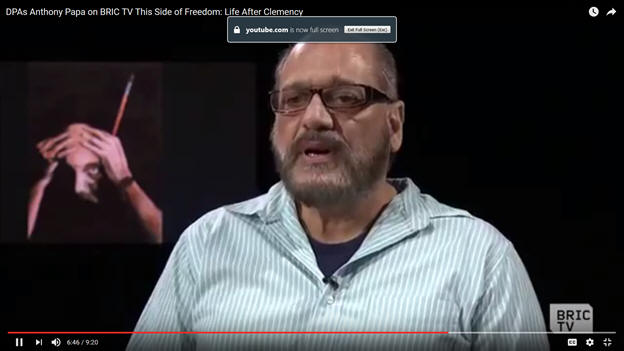
Drug Policy Alliance
www.drugpolicy.org
For
Immediate
Release:
Contact: Tony Newman 646-335-5384
May 23,
2016
Anthony Papa 646-420-7290
Wednesday Event: Anti-Drug War
Activist Anthony Papa Releases His New Book “This
Side of Freedom: Life After Clemency”
Papa’s Timely New Memoir
Addresses the Drug War, Mass Incarceration and Reentry Issues as President
Obama and Congress Seek Criminal Justice Reform
Book Release Event Coincides with
Celebration of Papa’s 10-Year Anniversary at the Drug Policy Alliance
Anthony Papa will release his new book,
This Side of Freedom: Life After Clemency at the New York office of
the Drug Policy Alliance (131 W. 33rd Street) on May 25th 2016.
This Side of Freedom: Life After Clemency
is a riveting, compelling tale about the life of activist, writer and artist
Anthony Papa. He tells firsthand of his experience of returning home after
serving 12 years of a 15-to-life sentence for a non-violent drug law
violation, sentenced under the mandatory provisions of the Rockefeller Drug
Laws of New York State. While behind bars, Papa found his passion for art
and
his haunting self-portrait
“15 to Life” ended up showing in the Whitney
Museum. Papa used his art and personal story to generate a wave of media
attention and in 1997 he was granted executive clemency by New York Governor
George Pataki. Papa literally painted his way to freedom.
Papa says
that the freedom he fought so hard to get smacked him swiftly in the face,
overpowering him. He struggled with his own freedom while fighting to free
those he left behind. Papa goes through heart-wrenching trials and
tribulations as he seeks to rebuild his life and continue his fight to end
the war on drugs. Along the way he meets an array of individuals from famous
movie stars to politicians and the very rich, enlisting their help in doing
away with mass incarceration and draconian sentencing laws that have
destroyed America's criminal justice system.
Papa’s
book launch event will coincide with a celebration for his 10-year
anniversary at the Drug Policy Alliance, where he is manager of media and
artist relations. His stinging editorials about the drug war have appeared
in news sources across the country and world. He is a frequent public
speaker and college lecturer on his art and criminal justice issues.
In
addition to his new memoir, Papa is also author of “15
to Life: How I Painted My Way to Freedom” (2004) a memoir about his
experience of being sentenced to state prison for a first-time, nonviolent
drug offense under New York's draconian Rockefeller Drug Laws. He has been
interviewed by a wide range of national print and broadcast media, including
The New York Times, The Washington Post, The Nation, National Public Radio,
Democracy Now, and Court TV, among others. He has appeared on nationally
syndicated talk shows such as MSNBC's "Melissa Harris Perry", CNN's "Your
Money," Charles Grodin, Geraldo Rivera, and Catherine Crier Live. Papa's art
has been exhibited widely, from the Whitney Museum of American Art in New
York to many smaller cultural centers around the country. Papa has worked to
end the war on drugs through many mediums, including as an artist, writer,
co-founder of Mothers of the New York Disappeared and his ten years at the
Drug Policy Alliance.
Advance praise for This Side of Freedom: "Anthony Papa's work,
beginning with his incredible paintings, continuing with his ground-breaking
memoir, “15 to Life,” and now this new offering, “This Side of Freedom,” is
almost single-handedly documenting one of the greatest civil and human
rights disruptions in our nation's history: the human destruction caused by
the war on drugs policies. Papa brings us, in living color and painful
authenticity, what these gross violations of human rights do to the spirit,
but more, how the spirit can still soar despite mountains of adversity. His
is truly on a hero's journey and one we should all take with him," said,
asha bandele, author of
“The Prisoner's Wife.”
What: Book Release Event for “This
Side of Freedom: Life After Clemency”
Where: The Drug Policy Alliance 131 W. 33rd Street, NYC Office 15th
Floor
When: May 25th, 2016 5-8pm
This Side of Freedom: Life After Clemency
by Anthony Papa
ISBN-978-1530731640 6 x 9 236 pages
$12.99
Paperback Pub Date: April 8, 2016
Anthony Papa¹s website:
www.15tolife.com
available on
Amazon
Link to
Release:
http://www.drugpolicy.org/news/2016/05/wednesday-anti-drug-war-activist-anthony-papa-releases-his-new-book-side-freedom-life-a
15 To Life
-09/30/06-- Martin Luther King Memorial Library, 901 G
Street NW, District of Columbia--PHOTOGRAPHER-MARVIN
JOSEPH/TWP--CAPTION-Prisoner and victim advocates, as
well as others gather to talk about rehabilitation of
prisoners through the use of art at the Taste of Justice
Fair. PICTURD, Folks attend an exhibition of prisoners
art work including Anthony Papa, a prominent ex-prisoner
and author of the book 15 to Life.
|
Endorsements for "15 To
Life" : How I Painted My Way To Freedom
"Anthony Papa has written
a riveting account of how he courageously painted his way to freedom from
prison after unnecessarily serving twelve years. His story puts a human
face on the nearly one million nonviolent drug offenders confined in prisons
throughout the country" --Susan Sarandon -Actor/Activist
"A powerful memoir of one
man's struggle for freedom, 15 To Life tells in vivid prose the story of
Anthony Papa, a painter and a casualty of the War on Drugs. This journey of
a soul shows the power of art to transcend the violence of prison, and all
that is possible when the human spirit refuses to be contained. Papa's
account should be required reading for New York lawmakers and all Americans
who care about civil liberties."
--Sister Helen Prejean - Author of Dead Man Walking
"Papa's
story gives me the chills. He's been through so much you won't believe it
'till you read it." Jack Black -Actor (School of Rock)
"Anthony Papa's "15 To Life" tells of
a heroic escape from a brutal system by a man who refused to give up. A
thrilling, unforgettable read! -- Tim Robbins - Actor (Mystic River)
"Anthony Papa's "15 To Life" is a must
read for the hip-hop community. Over 94% of the 17,000 people locked up
under New York's drug laws, the harshest drug laws in the country, are
black or Hispanic. Like Papa, I am trying to end these racist laws. We
need your voice. You can start by reading this book -- Russell Simmons -
Chairman Hip-Hop Summit Action Network"
" "Papa
is a true American hero whose ingenuity and never say die attiude conquered
frightful adversity " -- Jason Flom -President Atlantic/Lava Records
"Anthony Papa's "15 To
Life" is a gripping story of justice gone wrong and an inspiring tale of
personal triumph. It is a scathing indictment of the antiquated Rockefeller
drug laws that have imprisoned thousands of nonviolent offenders and wasted
billions of dollars of taxpayer money" --Former US HUD Secretary Andrew
Cuomo--author of Crossroads
"There have been a lot of
books over the years about men in prison, but Anthony Papa's "15 To Life" is
unique. This is a wrenching, compelling, and darkly ironic story of a man
discovering his artistic soul behind bars and using his talent to gain his
freedom. It will provoke you, it might enrage you, and it could even
inspire you. But it won't easily let you forget it." Peter Blauner --Best
selling Author of the Intruder and The Last Good Day
"The Rockefeller Drug
Laws must change and Papa's "15 To Life" is a good reason why!" -- Frank
Serpico Legionary Former NYC Police Officer
"15 To Life" is an
unbelievable story about one man's journey through a living hell and how he
survived and now is fighting to change the most racist drug laws in America.
Read this book - learn something! -- Al "Grandpa Munster" Lewis -
Actor/Activist
Overview of "15 To Life"
Anthony Papa was a typical individual that sought the American Dream,
Instead he found the American tragedy of the drug war. He had
a wife and child and worked hard to makes ends meet. Frustrated with his
situation he fell prey to a quick scheme to make some fast money. After
meeting a drug dealer at the bowling alley he frequented, he was asked to
deliver an envelope containing 4 and one half ounces of cocaine. At first he
refused, but after a while his desperate state overtook his better senses.
He agreed, and walked into an undercover drug sting. His one mistake was compounded into a living nightmare. Everything that could go wrong, did.
In 1985, he was found guilty and sentenced to
two 15 year to life sentences under New York State's draconian Rockefeller Drug Laws. Papa
was then sent to Sing Sing prison where the best years of his life would be lost
in one of the most dangerous prisons in America. Faced with violence and a
self-defeating environment he struggled to survive. Papa did this through his discovery of art. It was through his
painting that he transcended the negativity of imprisonment and found meaning in his life.
His art would also eventually set him free.
During Papa's time in prison he
created a body of art work that captures the prison experience.. He acquired 3 college degrees, including a Masters
Degree from New York Theological Seminary. After 10 years, Papa had exhausted all of his legal
remedies. His quest for freedom seemed gone. However, by a one in a million
chance, his self portrait titled "15 Years to Life" was chosen
to be exhibited at the Mike Kelley restrospective at the prestigious Whitney Museum of American Art in New York
City. This was not without a struggle. After Kelley selected his painting, the
curator Elisabeth Sussman, then informed the prison about the jarring
stipulation that the artist chosen must be a
convicted murderer. This was because of the intellectual context of
"Pay for Your Pleasure" the art installation it would be
centerpiece for. A confrontation occurred when the prison
administration would not allow Papa to participate. The Whitney had given
Papa an avenue to regain his only chance left for freedom. He then used the survival skills he had honed in prison
to convince the administration to allow him to participate in the show thus generating tremendous
publicity to his case.
In 1997, after 12 years
Anthony painted his way out of prison when Governor George Pataki granted
him executive clemency.
When released Papa continued to bring his message of reform to the public
by exhibiting his art and appearing on National shows.
Tired of politicians afraid of getting involved for fear of losing their
jobs, Papa formed the "Mothers of the New
York Disappeared", a group of ex-prisoners and family members of those incarcerated under
the
Rockefeller Drug Laws. In 5 years through street level protests, which
generated tremendous publicity, the group managed to change the face of the
war on drugs in New York bringing to the public the human element of the
drug war.
In many ways Anthony Papa's case is typical of the first time non violent
offender being incarcerated for many years because of the war on drugs.
Because of New York's obsolete drug laws, its prisons confine over 18,000
drug offenders, the vast majority being low-level criminals. It costs tax
payers over $715 million a year to imprison these offenders. Over 94% of
them are people of color.
Before he died, Cardinal John O'Connor joined New York's Roman Catholic
Bishops and the Mothers of the NY Disappeared that called on the governor
and state legislature to overhaul mandatory laws, urging for a more humane
and effective system. This eventually convinced Governor George Pataki, the
Senate and the Assembly to call for change of the Rockefeller Drug Laws in
2001. However, at this time in September of 2004 no reform has taken place
because of the shame of politics. The governor, assembly and senate have blamed each other for not cooperating while human beings are rotting away in prison.
These laws have served as a model for other states to follow resulting in federal mandatory
minimum laws for drug offenses that have filled prisons with over 1 million non violent offenders costing taxpayers at least 22 billion dollars a year.
The war on drugs has generated a grate debate by many, including political leaders, judges, and clergy. The urgent need for change in the way society
deals with the drug problem is shown by the words and wisdom of former U.S. National Drug Czar, General Barry McCaffrey, who had been nationally
responsible to fix the drug problem in all facets for years until he resigned from his position because of the administrations reliance on a
strictly punitive approach. He has stated, in part: "It is clear that we cannot arrest our way out of the problem of chronic drug abuse and drug
driven crime. We cannot continue to apply policies and programs that do not deal with the root causes of substance abuse and attendant crime". He
has also stated that, Mandatory sentencing ties the hands of judges too tightly and prevents them from exercising discretion and good judgement.
The war on drugs has also fueled the prison industrial complex. Revenue
raised from the business of imprisonment. For example, New York State now spends more money locking up criminals than educating students at its public
universities. According to a report released by the Correctional Association more than $761 million has been added to New York's prison budget over the
last decade, while spending for higher education has been cut by $615 million. Today, New York spends $275 million more to run prisons than state
and city colleges.
15 TO LIFE will attempt to break down the barriers that prevent the
public from understanding the prison experience by putting a human face on it through one man's struggle for freedom. Anthony Papa might have gone to
prison an ordinary man with little insight on the politics involved with his imprisonment.
However, he has emerged with a vision born from its
deprivation and now has become an icon for sentencing reform against the laws that once held him captive. Sharing his story through all formats of
media, lecturing at Universities such as Columbia and Harvard he continues to educate the public about prison and the war on
drugs. His is a story of
inspiration of the human spirit that creates a common path that anyone could follow in transcending a negative experience.
How it Began…
In 1985, Anthony Papa owned a radio repair
business in the Bronx. He had a young daughter and bowled in a league in
Yonkers. When one of his teammates asked if he wanted to make a quick $500 by
delivering an envelope, Papa agreed. That single mistake cost him twelve years in Sing
Sing, a maximum-security prison for 2,300 convicts on the banks of the Hudson
River.
Although Papa had never been in trouble
with the law, he was sentenced under New York’s draconian Rockefeller drug
laws that mandate a 15-year-to-life sentence for selling two or possessing more
than four ounces of a controlled substance. Since their enactment in 1973, the Rockefeller drug
laws have helped to quintuple New York’s prison population.
When Papa entered Sing Sing, one of
the most dangerous prisons in America, he left behind
his wife (who divorced him several years later) and a 6 year old daughter. He spent his first year consumed by loneliness,
regret and anger. An education supervisor at Sing Sing vividly remembers Papa’s
emotional state, which he describes as a daze. "He was lost; he didn’t
know what was going on. Luckily, he discovered art, and it just grabbed
him," he said.
Papa painted to combat boredom and
maintain his humanity in the harsh world of prison. He began painting
impressionistic landscapes and views of the Hudson River, which he could see
from the small window of his concrete cell. Papa’s passion was stirred when he
discovered the works of Pablo Picasso and Diego Rivera and saw that art could be
used to convey ideas and political statements. He began to paint obsessively,
sometimes at night by the moonlight that spilled into his six-by-nine-foot cell.
Undeterred by restrictions on most painting materials, he improvised by using
cooking oil to clean his brushes, toilet paper for texture, and cardboard as a
palette knife.
Art inspired Papa to fight for justice,
both personal and political. Papa’s breakthrough came in 1994, when his self-portrait, 15 Years
to Life, was exhibited at the Whitney Museum of American Art in Manhattan.
Showing a stupefied Papa holding his balding head and a paintbrush in his hands,
the painting produced a burst of publicity that generated public sympathy for
the imprisoned artist. Ultimately, it caught the attention of Governor George
Pataki.
Shortly after the Whitney exhibit,
journalist Anthony Lewis wrote the following about Papa in The New York Times:
There is a human element that gets lost in
all the political rhetoric about toughness on crime. It was brought home to me
the other day by a letter to the editor from a prison inmate in New York State,
Anthony Papa.
"I’m a first-time offender in my
tenth year of a 15-year-to-life sentence for passing an envelope containing 4 ½
ounces of cocaine," Mr. Papa wrote. "Since incarceration I have gotten
two college degrees and am attending graduate school at New York Theological
Seminary…I made a mistake when I was young. I needed a wake-up call, not to be
thrown into a cage for 15 years."
New York prisons are full of men and women
who are now fully rehabilitated, Mr. Papa said. He urged that their sentences be
shortened as part of the Pataki program. But his letter implicitly carried a
larger message: that we should be moving away from such a waste of public
resources and human lives.
December 23, 1996-A guard told Papa
to leave the prison yard and report to the office of the First Deputy
Superintendent. Papa assumed the worst: several days before, guards had
confiscated his political paintings and charged him with possession of
contraband. He was expecting a disciplinary ticket, maybe a week in solitary,
but certainly not the smile on the Deputy Superintendent’s face when Papa
walked into his office. "I just got off the phone with the governor,"
the Deputy Superintendent began. When he said the magic word-clemency-Papa fell
against the wall and cried.
Tony
Jr. Tony Papa Andrew Cuomo-
-----------------------------------------------------------------------------------------------------
--------------------------------------------------------------------------------------------------------
An artist and ex-convict tells some of his experiences in the violent, loud,
and notorious Sing Sing prison.
In 1985, Anthony Papa was a 29-year-old small business owner living in the
Bronx with his wife and young daughter. Bills were mounting, rent was due and
tensions were rising in his marriage when a gambling acquaintance stepped up and
offered him a quick $500 to deliver a package. Papa had doubts and misgivings,
but he accepted the proposal. The package Papa carried was full of cocaine and
he delivered it directly into the hands of undercover cops. To make matters
worse, this particular event came with an added twist; namely New York's
Rockefeller drug laws, which mandate a 15-year-to-life sentence for the weight
of the drugs Anthony had delivered.
15 to Life details how Papa transformed himself while in prison, from a
convicted drug courier into an artist and later into an activist. The first 80+
pages cover his dealings with a shady lawyer, codefendants turning on him and
his initiation into the jail system. Papa reinforces that what you see in the
movies about prison life is not far from reality. Sex, violence, drugs, deals
made and deals broken all take place on a regular basis behind the prison walls.
15 to Life takes a turn from prison narrative to survival tale when Papa
realizes that he is going to serve a good deal of his sentence. Papa finds his
inspiration to not give up when he sees a prisoner painting in his cell and
becomes mesmerized by the act. A short while later, emerging from a three-day
lockdown Papa has an epiphany as he looks around his cell. He considers the ten
paintings he has completed and sees his freedom on the canvas. At this point
Papa becomes committed to his art, realizing it is the only way he can survive
prison.
While Papa works on his art he starts to realize that his lawyer is not doing
much to help him. While in the library studying his case, a prisoner tells him
about the law that has sentenced him to 15 years to life. The Rockefeller drug
laws state that a judge must impose a minimum sentence of 15 years to life to
anyone convicted of selling two ounces or possessing four ounces of a controlled
substance. Kingpin or first time bust, everyone receives the same minimum
sentence. Papa now had another focus besides his art, his case and more
specifically, the law that put him behind bars.
Papa gets a break in September of 1993 when the Whitney Museum contacted Sing
Sing about a show they would be putting together. The Whitney was looking for
art by a murderer for their show. Papa saw an opportunity and pursued it,
telling The Whitney that he was a convicted killer. In his mind the lie would
expose his are and hopefully get him closer to freedom.
After the Whitney show Papa received his first press exposure, an in depth piece
in the Gannett Suburban Newspaper. An article in Prison Life magazine followed,
then a NY Times letter to the editor penned by Papa in regard to the Rockefeller
drug laws. Later, an Associated Press story that is printed in six New York
newspapers follows. Papa welcomes the press; the prison does not and reassigns
him to a harsher area of the prison.
Papa later learns of an opportunity to join a Master's Degree Program from the
New York Theological Seminary. While he is enrolled in the Master's Program Papa
starts the ball rolling on his plea for clemency from Governor George Pataki.
Papa details his attempts at clemency and his joy at finally receiving the news
that it had been granted.
After his release Papa tells of his days outside of prison. His major focus is
on the group he co-founds, Mothers of the New York Disappeared, named for the
mothers and relatives who have had family members disappear behind prison walls.
The group is focused on repealing the Rockefeller Drug Laws. The efforts of the
group have helped change public opinion on the law, however the public and the
government that represents them are not on the same page and the laws remain
unchanged.
* This novel is even more important now in ‘05 when snakes like Russell
Simmons, who yacht with the Rothschild family, accept the Rockefeller Laws'
token reformations as a jump-off to a political career.
5. Reseña de Libro de DRCNet: "15 To Life: How I Painted My Way to Freedom”,
de Tony Papa con Jennifer Wynn (Feral House Press, $22.95 HB)
Unas 17.000 personas – la vasta mayoría negra o Latina – están actualmente
cumpliendo sentencias mínimas obligatorias de prisión de décadas de duración en
el estado de Nueva York, el legado del esfuerzo pionero del Gob. Republicano
Nelson Rockefeller para suprimir el uso de drogas al imponer penas draconianas
aun contra los infractores pequeños de la legislación antidrogas. Cuando el
gobernador hizo presión por lo que ahora son conocidas como las leyes
Rockefeller sobre drogas - ¿qué tal eso como legado? – a principios de los años
70, él empezó el esfuerzo hacia el sentenciamiento mínimo obligatorio que barrió
el país en los años desde entonces. El Gob. Rockefeller merece una gran parte
del crédito, si eso es verdad, por empezar la tendencia que ha resultado en los
Estados Unidos – la tierra de los libres – el volverse el país más feliz con el
encarcelamiento en el mundo.
Anthony Papa (www.15yearstolife.com)
es una de las víctimas de las leyes Rockefeller sobre drogas. Como joven
trabajador casado en la Ciudad de Nueva York, Papa no sabía nada de esas penas
severas que aguardaban aquellos que violaban las leyes Rockefeller. Con poco
dinero después de una serie de pérdidas en el juego o en los bolos, Papa estuvo
de acuerdo en entregar un paquete para uno de sus amigos de la bolera.
Supuestamente, habrían sido fáciles $500; en vez de eso, fue el comienzo de
estancia extendida de Papa en el mundo dantesco de la justicia criminal y del
sistema correccional de Nueva York.
Papa fue condenado al padrón de-15-años-a-prisión-perpetua y cumplió muchos
largos años en Sing Sing, uno de las más famosas, si no la más notoria, de las
prisiones en el gulag siempre creciente del Empire State. Pero a través del
desarrollo de un talento artístico que él nunca supo que poseía antes de ser
preso, Papa ganó eventualmente una medida de fama, y él pudo transformar eso en
clemencia del Gob. George Pataki. Papa salió de la prisión en Enero de 1997, y
desde entonces él ha estado profundamente envuelto en intentar abrogar las leyes
que casi le robaron su vida y que han mantenido a millares de otros infractores
no-violentos de la legislación antidrogas enclaustrados durante años tras años
tras años.
“15 To Life” es la historia de la jornada de Papa al infierno, su lucha
desesperada para recobrar su libertad y el esfuerzo continuo para revocar las
leyes Rockefeller y conseguir justicia para los millares de infractores por
drogas que todavía se pudren dentro de Attica, Clinton, Sing Sing y todos
aquellos otros lugares cuyos nombres ahora son sinónimos de infamia. Con la
asistencia de Jennifer Wynn, Papa invita el lector a una narrativa horrible y
emocionante de su odisea en el sistema de justicia criminal de Nueva York.
(Después de terminar el libro de Papa, yo sentí una fuerte urgencia de nunca
escribir esa frase sin usar comillas en torno de la palabra “justicia”.)
Las prisiones tienen altos muros no solo para mantener a los prisioneros
adentro, pero también para mantener al conocimiento público afuera. Como Papa
reitera tan elocuentemente, son lugares brutales. Están llenos de sadistas,
brutos y ladrones – y esos son solo los guardias. La administración de las
prisiones de Nueva York sobre la cual Papa escribe solo puede ser descrita como
sadismo institucional: Los guardias siniestramente pegando sus porras mientras
llegan nuevos prisioneros, los escuadrones de agentes de la prisión vestidos con
ropas antidisturbios que tan bravamente dan una golpiza en los internos que se
atreven a protestas contra su maltratos, y las infracciones arbitrarias menos
violentas, pero igualmente alocadoras distribuidas por los guardias a gusto. ¿Y
tenemos el coraje de imaginarnos por qué las personas salen de la prisión peor
que cuando ellas entraron?
Sadismo y salvajería no están, claro, limitados a los agentes penitenciarios. Al
tratar los infractores de la legislación antidrogas como criminales peligrosas
que merecen sentencias de prisión de décadas de duración, Nueva York
esencialmente tira a los lobos millares de infractores no-violentos por drogas.
Con aquellas sentencias largas, ellos son enviados a prisiones como Attica y
Sing Sing que son el hogar de criminales verdaderamente endurecidos. Usuarios
perdidos se tornan presa fácil de los hombres violentos que florecen en la
sociedad penitenciaria. El propio Papa relata por lo menos a dos incidentes en
que él fue atacado por otros prisioneros, uno mentalmente perturbado, el otro
simplemente malo.
Tony Papa pudo salir de la prisión a través de la pintura, y grande parte de “15
To Life” cuenta la historia de como, gracias a mentores presos, él descubrió a
su talento y pudo producir imágenes tan angustiosas y horribles que pudo romper
las paredes de silencio, hacer aliados en el lado de afuera, y eventualmente,
conseguir su libertad. Pero Papa fue la excepción: los gobernadores de Nueva
York raramente conceden clemencia y millares tras millares de otros Tony Papas
están pudriéndose tras rejas mientras tu lees estas palabras. Desde su puesta en
libertad, Papa ha sido muy activo en el movimiento para conseguir la libertad
para el resto.
Los últimos capítulos de “15 To Life” son las últimas notas de un trabajo en
progreso: el esfuerzo de años para abrogar las leyes Rockefeller sobre drogas.
Papa recuenta sus frustracinoes al tratar con los políticos que reconocen la
crueldad, la deshumanidad y la inutilidad de las leyes Rockefeller, pero se
rehúsan a cambiarlas por causa de cálculos políticos, y su percepción de ello
solo ocurrería con un levante desde abajo para que aquellas leyes fuesen
cambiadas. Ahora, a fines de 2004, las leyes Rockefeller todavían están en su
lugar, pero Papa ha ayudado a trazar un movimiento que amenaza derrumbarlas. Los
capítulos finales de “15 To Life” todavía necesitan ser escritos.
“15 To Life” es una incriminación marcante del sistema de justicia criminal de
Nueva York, y por extensión, de todo el abordaje del aparato judiciario-legal
hacia el uso de drogas en este país. Pero es una incriminación que se parece con
una novela. Este relato horripilante en primera persona del crimen y de la
injusticia, del encarcelamiento y de la redención, es un abridor de ojos
garantizado para cualquer persona que piense sobre si nuestro abordaje actual de
las drogas es el correcto. Y más generalmente, es una incriminaci[no gritante de
una cultura de prisión en este país que amenaza robar a la alma de Estados
Unidos. Léelo. Léelo y espera que podamos encontrar un camino mejor. Pero léelo
y llora por las centenas de millares de estadounidenses privados de sus
libertades y enclaustrados en fábricas de brutalidad.
Y léelo y llora por nosotros. Thomas Jefferson observó famosamente, “Cuando yo
considero que Dios es justo, temo por mi país”. Después de leer “15 To Life”,
todo lo que yo puedo decir es, “Yo también”.